
Selling your home in Irvine starts with a defensible price, a preparation plan that fits your property's condition, complete disclosures, and a closing strategy that protects your next move. There is a lot more to it than placing a sign in the yard. Your timing, your competitive set, your costs, and your contract terms all shape the final result. This guide walks Irvine sellers through what to address from the decision to list all the way to handing over the keys.
Irvine Home-Sale Market Snapshot 2026
A useful read on the Irvine market starts with property-specific evidence rather than a single citywide figure. Before setting expectations, look at recent comparable sales, directly competing active listings, pending contracts, and how long similar homes have stayed on the market.
The four measures that matter most are the recent sale range for comparable homes, days on market for similar properties, the relationship between list and accepted prices, and the number of directly competing listings. These readings can differ sharply by village, attached versus detached housing, HOA costs, interior location, parking, lot utility, renovation level, and school-boundary considerations.
What the Irvine Market Looks Like Right Now
Selling in Irvine works best when your price and presentation match the alternatives buyers can see in your specific village and price range. A citywide reading gives helpful context, but it can't replace a side-by-side comparison of homes with similar location, condition, layout, HOA structure, and upgrade level.
Irvine doesn't behave like one uniform housing market. A renovated detached home may compete against a very different set of listings than an attached residence with similar square footage. In planned communities, buyers often weigh monthly HOA dues, possible special assessments, parking configuration, outdoor space, interior location, floor plan efficiency, and the quality of nearby active listings all at once.
The homes that draw the strongest early attention are usually the ones where buyers can quickly understand the value. Clean, well-presented homes priced in line with recent comparable sales are easier to evaluate than listings that start above the supportable range. When buyers have several similar options, an ambitious list price can leave a home sitting longer.
For Irvine sellers, the most important comparison isn't simply the closest sale. It's the current competitive set. Group comparable homes by village, property type, condition, HOA obligations, parking, renovation scope, and usable outdoor space. A remodeled home with a favorable interior setting may justify a different strategy than a similar-sized property with deferred maintenance, a less convenient layout, or higher recurring ownership costs.
Recent sales data on the Irvine community page shows a median sales price of about $1,599,387 and an average sales price of about $2,060,495 as of November 2026. Those numbers show just how much is at stake in pricing, concessions, and closing decisions, and why the gap between median and average reflects the wide range of homes trading across the city.
Step 1: Decide When to Sell and Whether You're Ready
The right time to sell is when your personal readiness lines up with a competitive market position for your home. Spring can bring more household moving activity, especially among buyers planning around school calendars, but the calendar alone doesn't decide the best result. Inventory, financing conditions, property readiness, and direct competition often matter more.
Before listing, you should be able to answer a few questions with confidence. Do you know your approximate mortgage payoff and the minimum proceeds you need for your next move? Can you carry housing, maintenance, and moving expenses if the sale takes longer than expected? Have you decided whether selling first, buying first, or arranging temporary housing best fits your comfort with risk?
Next, take an honest look at whether the home is ready to compete. If visible repairs, dated finishes, clutter, or weak presentation put it behind nearby alternatives, a short preparation period may improve your launch. If the property is already in good shape and direct competition is limited, waiting may add uncertainty without creating a real advantage.
Seasonality should support a plan, not replace one. The strongest listing window is often when your home can hit the market with complete documentation, clear value, and a realistic timeline for your next move.
Step 2: Price Your Home to Sell, Not Just to List
The best Irvine list price is supported by recent comparable sales and by the homes buyers can choose from when your property launches. A solid comparative market analysis looks at closed sales, pending activity, active competition, location within the community, condition, updates, usable space, lot characteristics, parking, and HOA obligations where they apply.
Overpricing affects more than days on market. A listing's first stretch on the market usually draws the most focused attention from qualified buyers. When the value isn't clear from the start, buyers may wait for a reduction, compare your home against stronger alternatives, or assume future negotiations will favor them.
Pricing for a faster sale and pricing for the strongest net proceeds are related, but they aren't the same thing. A seller prioritizing speed may position the home to compare favorably against active alternatives. A seller focused on maximizing proceeds may price near the top of what the evidence supports, then weigh offer quality, requested credits, financing strength, and closing certainty.
The goal isn't to underprice a home just to create activity. It's to make the value easy to understand for the buyers most likely to act. In Irvine, that means accounting for differences that can change buyer perception in a big way, including detached versus attached housing, HOA costs, parking, lot usability, interior location, renovation quality, and the nearby homes buyers will tour the same day.
A written pricing review that organizes relevant closed sales, active competition, and property-specific adjustments is worth having in hand before you choose a list price. You can request one here.
Common Pricing Mistakes in Irvine
- Anchoring the list price to an automated estimate instead of relevant closed sales and current competition.
- Treating remodeled and original-condition homes as equal because they share a village.
- Ignoring HOA dues, parking, interior location, and special assessments when selecting comparable homes.
- Reducing the price again and again without addressing presentation, feedback, or competing inventory.
Step 3: Prepare Your Home and Focus on What Moves the Needle
The highest-return preparation usually starts with condition, cleanliness, and presentation, not a full renovation. Begin with repairs that could make buyers question maintenance, such as damaged surfaces, malfunctioning fixtures, visible moisture concerns, worn flooring, neglected landscaping, or deferred exterior upkeep.
Then turn to cosmetic improvements that strengthen first impressions. Fresh neutral paint, better lighting, updated hardware, clean grout and caulking, organized storage, and a thorough deep clean can make a home feel more competitive without turning the sale into an open-ended remodel. Decluttering also helps buyers see room size, natural light, storage, and flow.
Staging can be useful for vacant homes, unusual floor plans, and properties competing in a higher-finish segment. Its job is to show how spaces can function, not to hide a property's condition. Photos, video, and in-person showings should all present the same standard.
Be selective with major projects. Replacing a functional kitchen or bathroom just to chase a higher price can add cost, delay, and design risk without guaranteeing a matching return. In Irvine, the most useful improvements are generally the ones that close an obvious gap between your home and nearby alternatives. Repairs, neutral presentation, lighting, curb appeal, and clear room function often deliver more practical value than highly personal remodel choices.
Prepare your records as carefully as the home itself. Permits, warranties, repair invoices, HOA documents, and notices help buyers understand the property and reduce uncertainty once an offer is accepted.
Seller Costs: What to Expect at Closing in Irvine
California law authorizes a documentary transfer tax of $0.55 for each $500, or fractional part, of taxable value where imposed. Local practice and the terms of your transaction determine the final allocation.
| Cost item | Typical range or rate | Who pays | Notes |
|---|---|---|---|
| Listing-side compensation | Negotiable | Seller | Terms should be agreed in writing before listing. |
| Buyer-side compensation or concession | Negotiable | Negotiable | May be addressed in an offer or counteroffer. |
| Documentary transfer tax | $0.55 per $500 of taxable value, where applicable | Negotiable | Local recording practices and transaction details affect the final amount. |
| Title and escrow fees | Varies by sale price and provider | Negotiable | Review projected charges before accepting an offer. |
| Attorney fees | Usually not required | Seller, if retained | Escrow commonly coordinates a standard California residential closing. |
| Home warranty | Optional | Negotiable | May be offered as part of negotiated terms. |
| Prorated property taxes and HOA amounts | Varies | Seller | Prorated through closing based on billing cycles and contract terms. |
| Seller concessions or credits | Negotiable | Seller | Credits may address repairs, financing costs, or other agreed items. |
Your final closing statement will show the transaction-specific allocation of taxes, fees, credits, payoffs, and prorations. California Revenue and Taxation Code Section 11911 sets the statewide documentary transfer tax rate.
Step 4: Navigate Disclosures and Legal Requirements
California sellers must disclose known material facts that could affect a buyer's decision about a residential property. For many one-to-four-unit transactions, this includes the Transfer Disclosure Statement plus additional disclosures that may apply because of the property's age, location, hazard-zone status, HOA involvement, improvements, or known conditions.
The California Department of Real Estate explains that sellers of many residential properties must provide a Transfer Disclosure Statement covering physical condition, potential hazards, special taxes, assessments, and other relevant factors. Organize this information before the home goes on the market rather than scrambling after an offer is accepted.
Gather permits, repair records, warranties, HOA documents, notices, invoices, and details about any recurring property issues. This is especially helpful in Irvine, where buyers often review association materials, alteration history, community rules, and maintenance records closely.
Describe known conditions accurately and consistently. Don't guess about prior work, downplay a recurring problem, or rely on a casual verbal explanation when written disclosure is appropriate. If new information comes up before closing, address it promptly in writing.
Incomplete disclosures can lead to delays, credit requests, cancellation rights, disputes, and potential liability after closing. A thorough disclosure process gives buyers clearer information and puts you in a more organized position at the negotiating table.
Step 5: Review Offers and Negotiate Effectively
The strongest Irvine offer balances price, certainty, timing, and risk rather than just showing the highest headline number. A higher price may not deliver the best result if it comes with weak financing, heavy credit requests, an impractical closing schedule, or terms that create uncertainty after acceptance.
Review proof of funds, lender documentation, deposit structure, proposed closing date, requested credits, contingencies, and any special contract terms. Financing, property condition, title, disclosure, and value-related contingencies all affect how confidently you can plan for closing.
Escalation language deserves a careful read. A promise to beat another offer may include a price cap, documentation requirements, or conditions that limit its real value. Compare the complete offer package, including the buyer's ability to perform, requested concessions, timeline, and likelihood of a smooth transaction.
Counteroffers can improve more than the purchase price. You may negotiate possession timing, credits, repairs, deposit terms, personal property, and closing deadlines. How much leverage you have depends on how your home compares with the active alternatives buyers can choose from.
A strong counteroffer protects your priorities without creating unnecessary friction. If timing matters most, focus on a workable closing date and possession terms. If net proceeds matter most, compare credits, compensation terms, repair requests, and financing risk alongside the proposed price.
Step 6: Move Through Escrow and Close
Escrow coordinates documents, funds, title work, payoff information, and the deadlines set in the accepted purchase agreement. Acceptance is a big milestone, but your work continues until conditions are satisfied, funds are delivered, and ownership transfers.
During escrow, buyers usually complete their agreed property investigations and may submit repair requests or ask for credits. You can agree to repairs, offer a credit, decline a request, or negotiate another solution that keeps the transaction moving. When financing is involved, the lender also requires a value review to support the loan amount. A lower value conclusion can lead to renegotiation, additional buyer funds, a price adjustment, or another agreed resolution.
Title work identifies ownership issues, liens, easements, and other matters that may need to be resolved before transfer. Responding quickly to payoff requests and document questions helps avoid unnecessary delays.
Before closing, buyers typically complete a final walkthrough to confirm the home is still in the agreed condition. Once documents are signed, funds are deposited, closing conditions are met, and the deed is recorded, ownership transfers through escrow. Plan keys, garage remotes, access codes, utilities, and move-out timing around the possession terms in your contract.
Your Net Proceeds: A Simple Framework
Pro Tip: Estimate net proceeds by working from the expected sale price downward.
- Start with a realistic sale price supported by current comparable properties.
- Subtract the mortgage payoff and any liens that must be cleared.
- Subtract closing costs, including negotiated compensation, transfer taxes, title, escrow, and prorated obligations.
- Subtract any buyer credits, concessions, repair commitments, or warranty costs you agree to provide.
- Keep a reserve for moving expenses, utility adjustments, and transaction-related changes.
If your home has appreciated significantly, talk with a qualified tax professional about potential capital-gains consequences. Eligibility for the primary-residence exclusion generally depends on ownership and use tests during the five years before the sale.
Planning Your Irvine Sale
Every Irvine sale comes down to how your home stacks up against the specific listings buyers will compare it to, and how well your pricing, preparation, and contract terms protect your next move. Joe Chung is a licensed California real estate agent (CA DRE #01963102) with First Team® Real Estate, and through Real Estate by Joe Chung he helps Irvine sellers with data-informed pricing, tailored property marketing, and full transaction management from listing to closing. Joe also works with sellers in English, Mandarin, and Taiwanese.
If you'd like a clear read on your home's likely market position and estimated proceeds, call or text Joe at (949) 678-0999, email joechung@firstteam.com, or reach out through the contact page.
Frequently Asked Questions
How long does it take to sell a home in Irvine right now?
The timeline depends on price range, condition, presentation, and how many comparable homes are available at launch. Allow time for preparation, marketing, showings, negotiation, and the escrow period set in the accepted contract. A review of similar active, pending, and recently sold homes gives the most relevant estimate.
What are the total costs of selling a home in Irvine?
Selling costs can include negotiated compensation, title and escrow charges, prorated property taxes or HOA amounts, loan payoff, and agreed buyer credits. California authorizes a documentary transfer tax of $0.55 per $500 of taxable value where imposed. Your projected closing statement should identify the costs tied to your specific transaction.
Do I need an attorney to sell a home in Irvine?
A lawyer generally isn't required for a standard residential sale in Irvine because escrow commonly coordinates the closing process. Legal advice can still be useful for title questions, estate matters, tenant issues, ownership disputes, or unusual contract terms.
Should I sell before I buy my next home, or buy first?
Selling first can clarify the proceeds available for your next purchase and reduces the risk of carrying two properties. Buying first may give you more moving flexibility, but it can require stronger reserves and carefully structured timing. The right choice depends on your equity, financing capacity, comfort with risk, and preferred moving schedule.
What is the best time of year to sell a home in Irvine?
The strongest time to list is when your home is prepared, competitively priced, and well positioned against available alternatives. Spring may bring added moving activity, but inventory, condition, and village-level competition often matter more than any single month. A well-presented home can perform well in different seasons.
FROM OUR BLOG

Cost of Living Comparison: What to Expect in Irvine
An Irvine cost of living comparison starts with housing, but a realistic relocation budget also includes taxes, insurance, transportation, utilities, and everyday spending. Irvine sits well above the national average on housing costs, so plan for expenses beyond the monthly home payment. For relocat

Using Your Newport Beach Starter Home Equity to Move Up
Your Newport Beach starter-home equity can help fund the down payment on your next purchase once you account for the mortgage payoff, selling costs, and reserves. You bought your first home in Newport Beach, and now it's working for you. The equity that built up quietly while you lived your life can
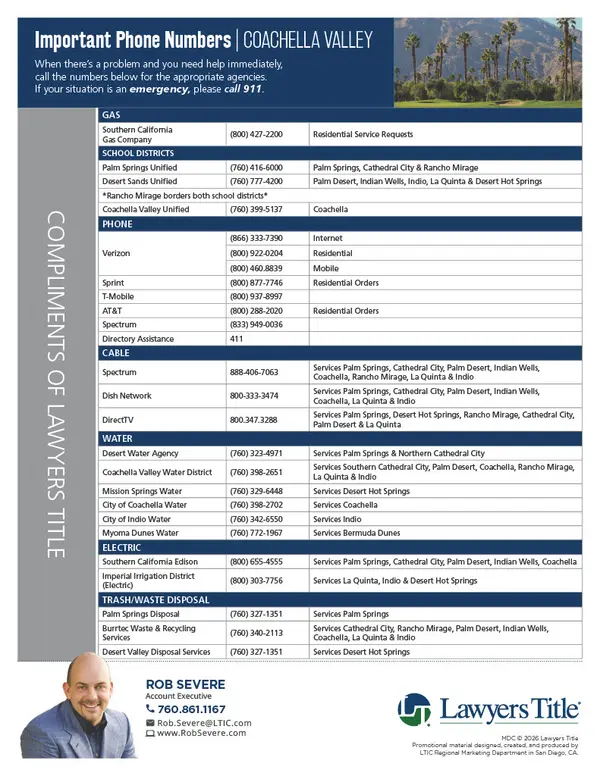
Important Phone Numbers | Coachella Valley
WORK WITH US
Reach out to an expert real estate agent today. Dive into the world of luxury real estate with guidance from our devoted team. Your dream home is within reach.


Real Estate Agent CA DRE# 01963102Brokerage DRE# 01008773
+1(949) 678-0999 | joe@9496780999.com